
Catamarans (Exercise Bike Game)
Interactive Training System

Concept Overview
From a stationary bike to a combat catamaran. We transform tedious cardio sessions into thrilling naval operations. Our system consists of a hardware kit and a dedicated app that turn any ordinary exercise bike into a virtual control deck for an attack catamaran.
Easy Setup
- Universal Compatibility: The sensor and control kit can be easily mounted on any stationary bike, whether home-use or professional-grade.
- Multi-Platform Support: The app runs on PC and all Android devices. You can launch the game on a computer, tablet, smartphone, or via an Android TV box to battle on the big screen.
Controls
- Total Maneuverability: Specialized handles are installed for steering (left/right). Each handle features a set of buttons to trigger in-game events, such as launching torpedoes or activating radar.
- Pedal Connectivity: Sensors track pedaling cadence and direction (forward/reverse). The harder you pedal, the faster your catamaran moves.
Game Modes
- Multiplayer: Compete with friends in the gym or other players worldwide in real-time. Features include Deathmatch and Co-op modes.
- Single-Player Campaigns: Navigate the open sea, track down naval mines, and engage submarines or high-speed interceptor boats.
Gameplay Flexibility and Adaptation
- Our hardware and software framework serves as a universal platform that can be easily adapted to any game design.
- The sensor and controller system allows for the integration of exercise bikes into diverse virtual worlds - from deep-space flight simulators to off-road racing.
Team Competitions for Fitness Clubs
- The system is perfectly tailored for group classes. Instead of individual rides, participants join a shared gaming session. This enables full-scale team battles where the outcome depends on the coordinated efforts of the entire group.
- For fitness clubs, this is a ready-to-use tool for increasing member retention and creating unique club championship formats.
Technical Implementation
Project Objectives (Concept Development)
- Develop a functional prototype to analyze user-system interaction patterns.
- Define a set of game design solutions tailored to the specific mechanics of a stationary bike.
- Identify potential issues arising during prolonged high-intensity physical exertion.
- Refine single-player campaigns and network multiplayer architecture.
Prototype Technical Specifications
- Stationary Bike: HouseFit model. Control Handles: Built using RHINO brake lever assemblies.
- Input Sensing: Hall-effect sensors + neodymium magnets (for tracking lever pull depth and pedal cadence).
- Data Acquisition: Arduino Mega (+ Ethernet Shield).
- Communication: Local network (Wi-Fi router) for data transfer between Arduino and the application.
- Development Environment: Unity3D.
Base Prototype (March 2015)
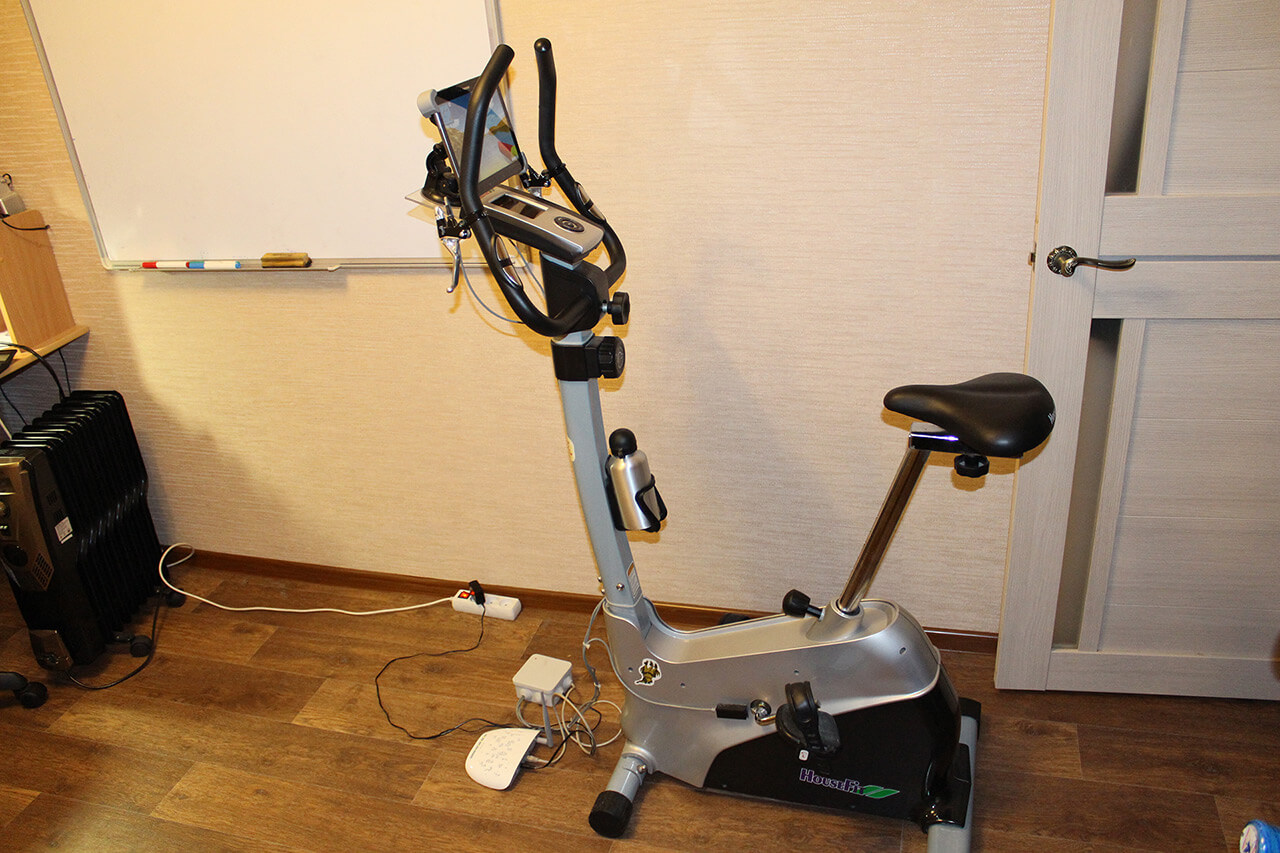
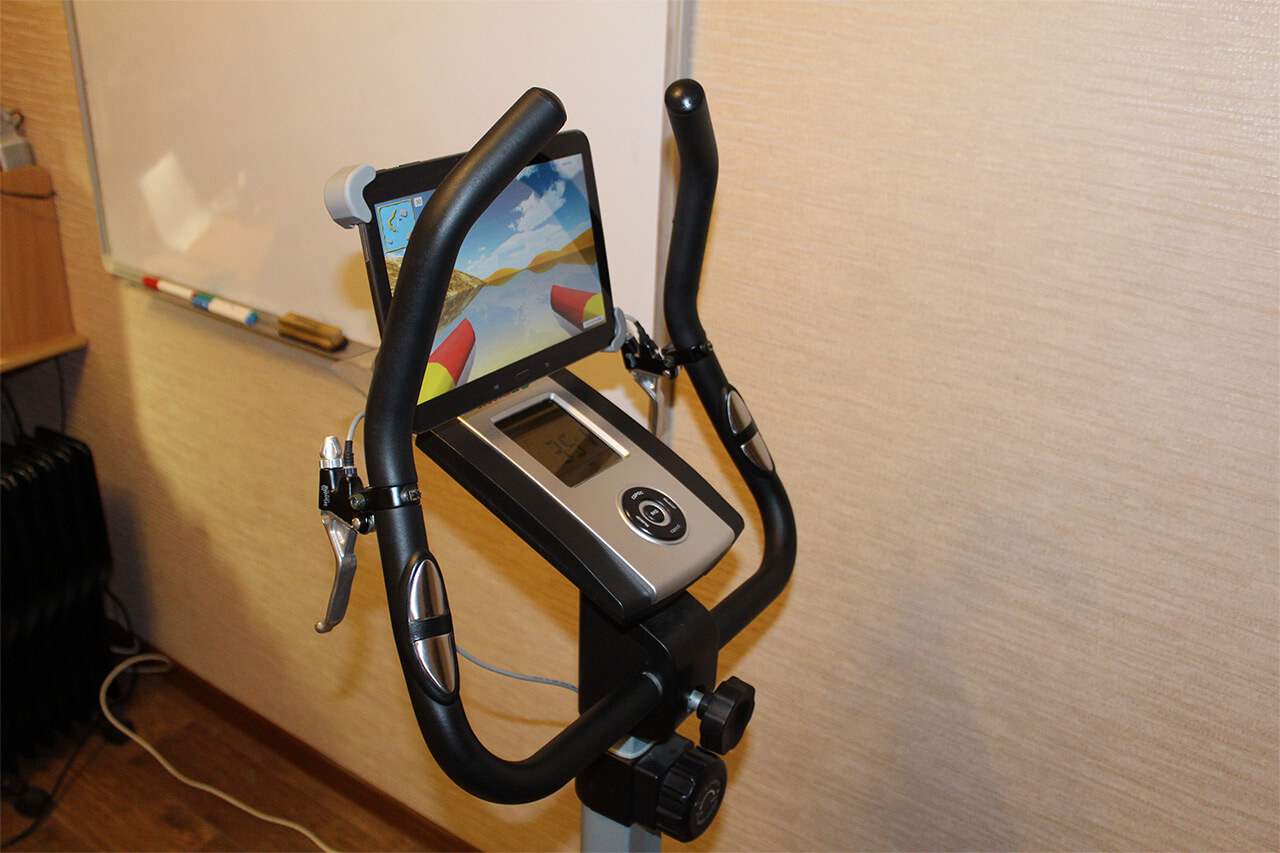
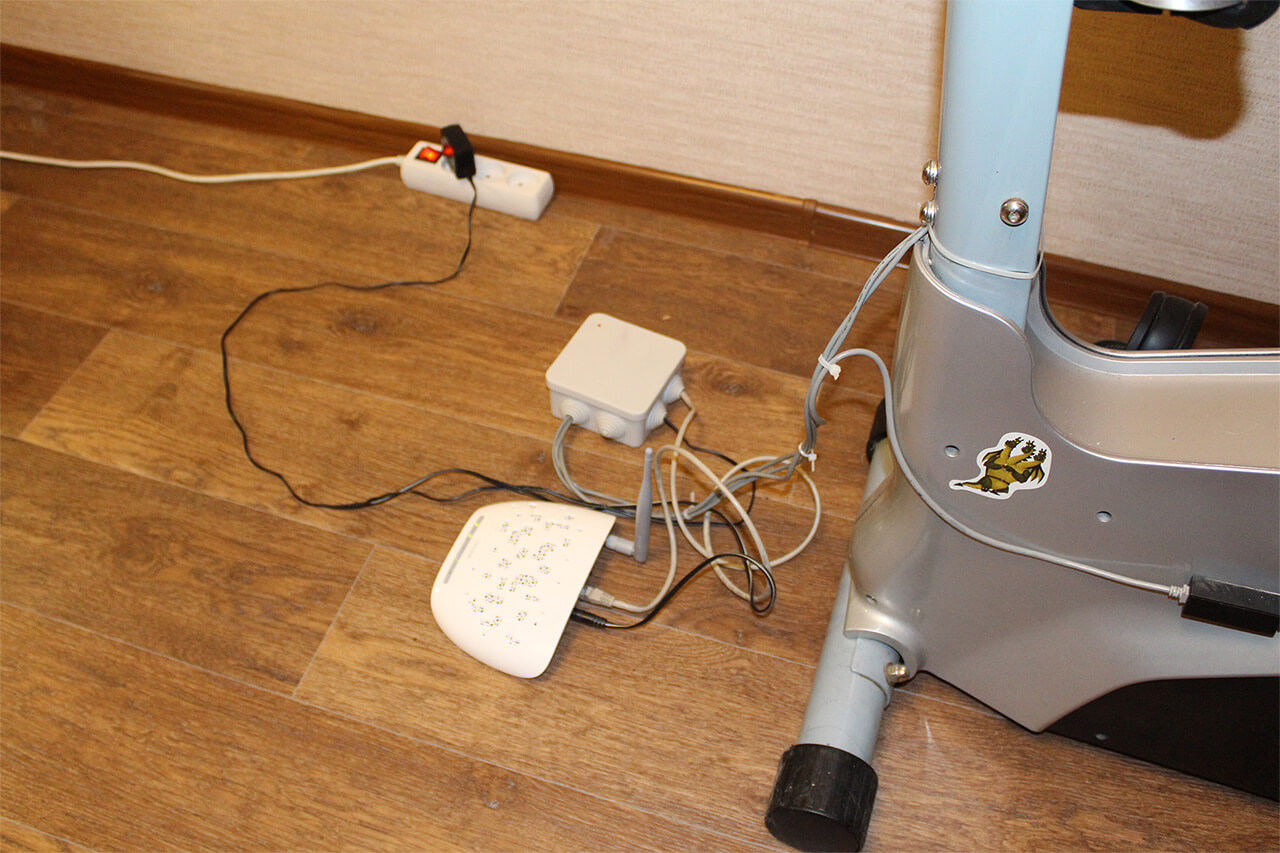
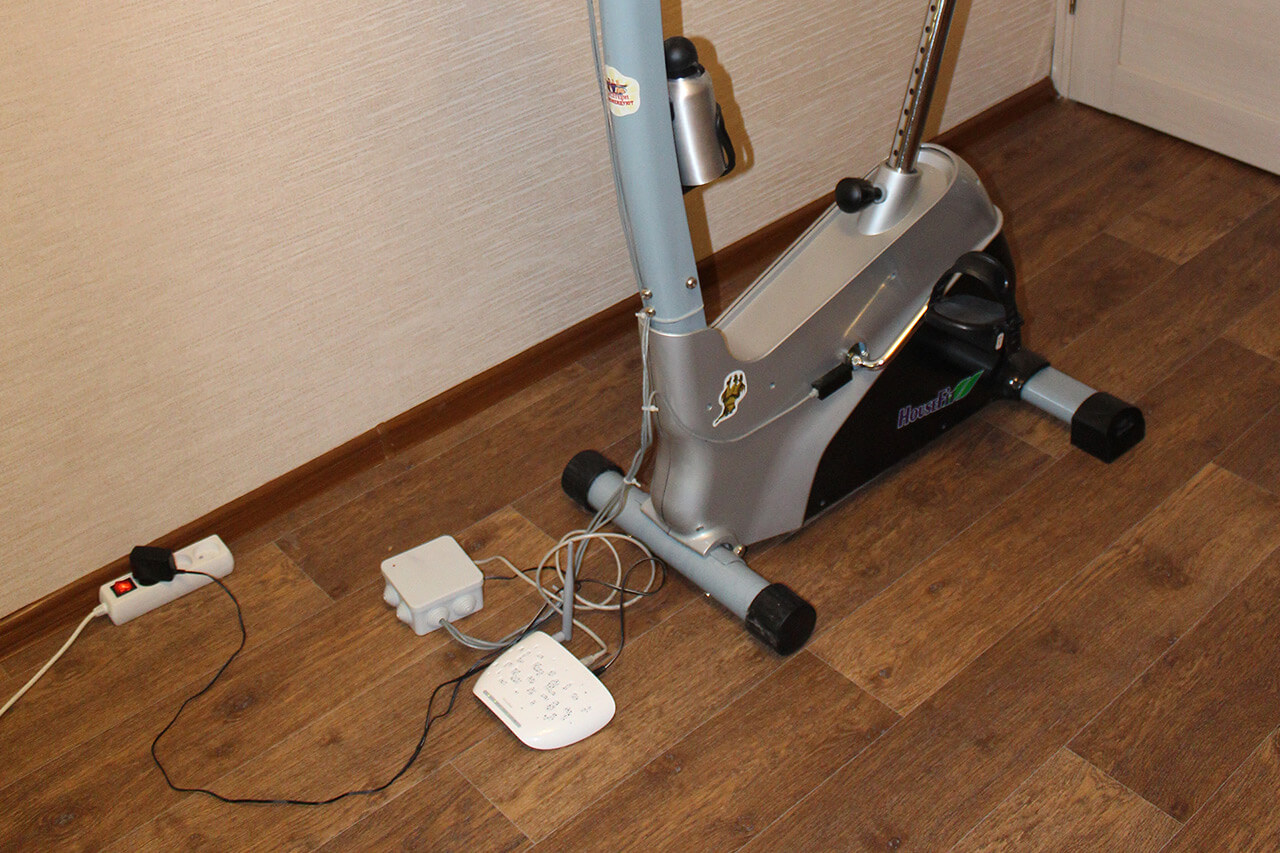
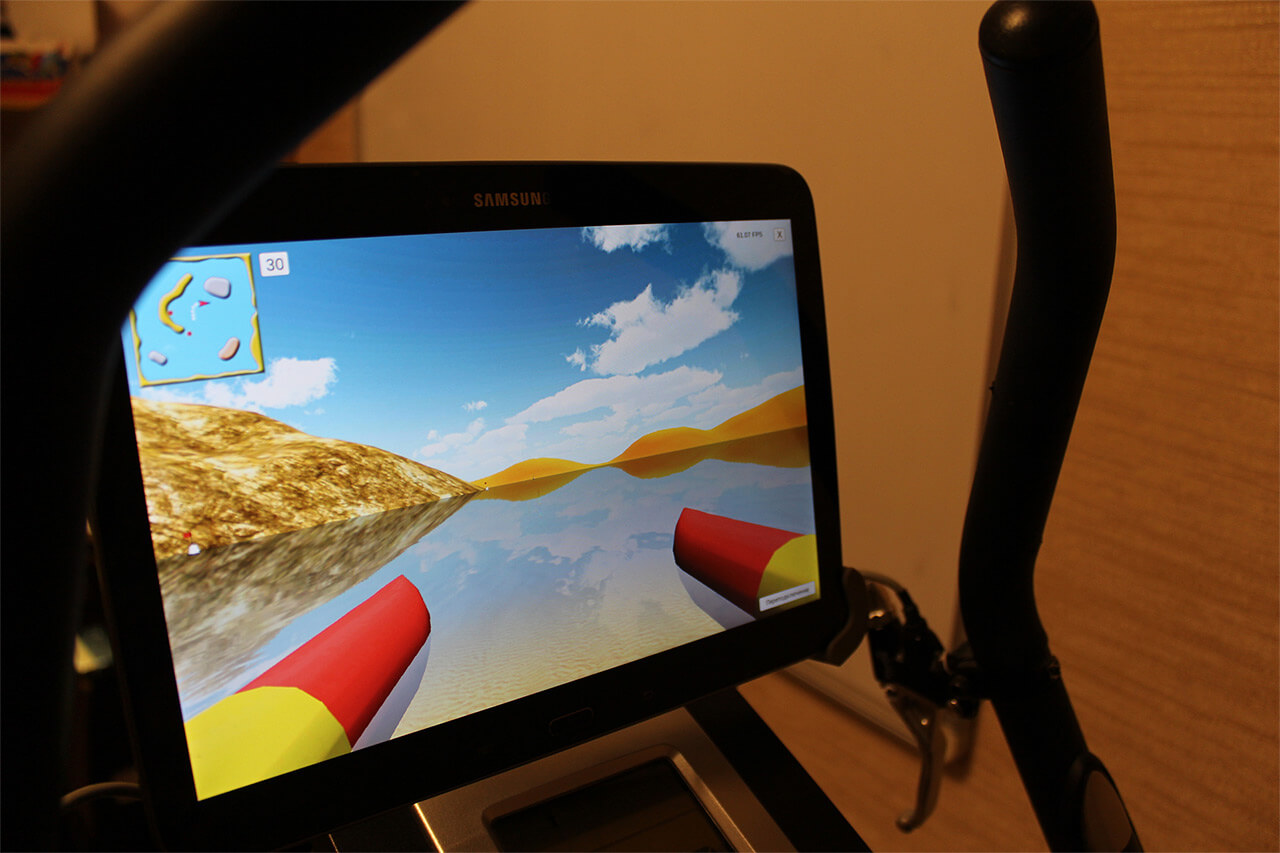
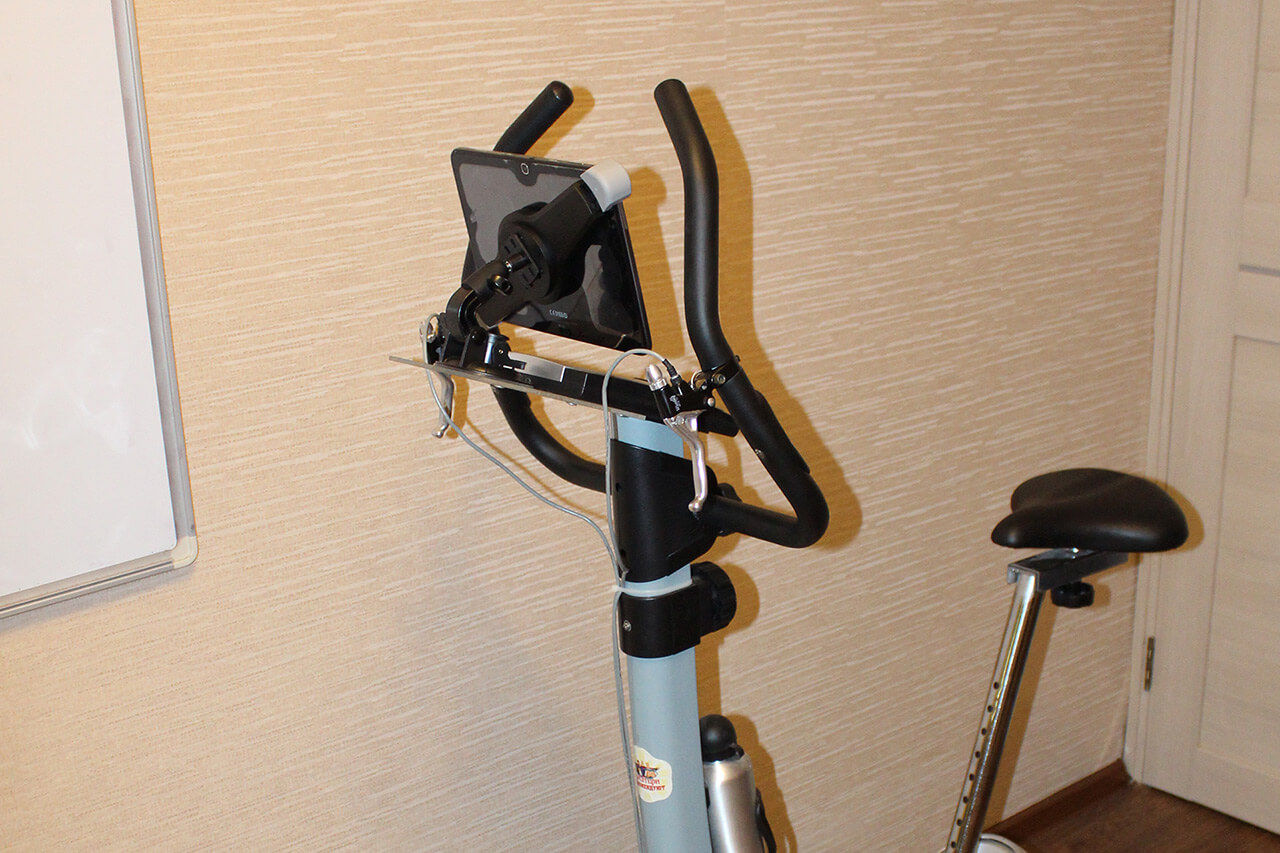


During extensive testing, we moved away from complex control schemes. Tests revealed that during high-intensity training and significant physical strain, users struggle to coordinate intricate movements. To maintain focus on gameplay and sustain the workout tempo, we implemented a highly simplified system: two steering handles with a single button on each for core actions.
Single-Player Campaign Gameplay Prototype (September 2015)
As part of the gameplay concept development for stationary bike systems, the following core elements were established:
- Pacing and Energy Mechanics
The player must maintain continuous movement, where the defining factor is consistent pacing rather than raw speed. To reinforce this, "Energy Blocks" were introduced. These are earned by maintaining a steady cadence. The system includes a consistency indicator and a progress bar showing the real-time accumulation of the next Energy Block. - Combat System
The system features naval weaponry (torpedoes). Once launched, a torpedo is unguided; the player must lock onto the target before firing. When engaging moving targets, the player must account for lead distance and velocity.
Cost: 1 Torpedo = 1 Energy Block. - Navigation and Radar
A mini-map displays the surrounding terrain and the player's current position. Targets appear on the map only when the Radar is active.
Cost: 3 Energy Blocks for a limited duration. - Session Management
The game duration is set at the start of the campaign. If a workout requires changing the bike's resistance levels (x1, x2, x3), specific time intervals are assigned to each mode. The system provides voice or visual prompts when it is time to switch resistance levels.
Target Types:
- Naval Mines: Spawn at random locations. The objective is to locate and neutralize them. Mine positions are highlighted when the Radar is active.
- Submarines: Submarines travel underwater and surface at one of four predetermined locations, remaining stationary for a short period. The player must intercept and destroy them using 1–4 torpedoes (depending on difficulty). If the player approaches too closely, the sub sounds an alarm and dives. Upon destruction, it drops 3 Energy Blocks as loot.
- Minelayers: High-speed boats that travel to specific points to deploy mines before moving to a new location. They require a single torpedo to destroy. Due to their speed, they are harder to hit than stationary targets.
- Unknown Objects: These appear in one of four locations but do not appear on radar. The player must scout all potential locations until visual contact is established. Requires 1–3 torpedoes to destroy.

Catamarans
Android, PC
Gameplay Implementation Video
Build 1.025b (Android) – September 2015
Build 1.025b (Android) – September 2015
Testing and Project Status
Testing was conducted with a select focus group of players for the single-player campaign. This phase successfully validated all core hypotheses of the proposed concept. However, the project did not secure commercial backing and has been on hold as a concept since 2016.
Testing was conducted with a select focus group of players for the single-player campaign. This phase successfully validated all core hypotheses of the proposed concept. However, the project did not secure commercial backing and has been on hold as a concept since 2016.
Platform: Arduino + Android, PC
Year of Creation: 2015
Developer: E140Games